
The Rise of Smart PPE: Voltage-Detecting Gloves and the Complacency Trap
Wearable proximity sensors are changing industrial electrical safety, but are they building a fatal reliance on batteries?
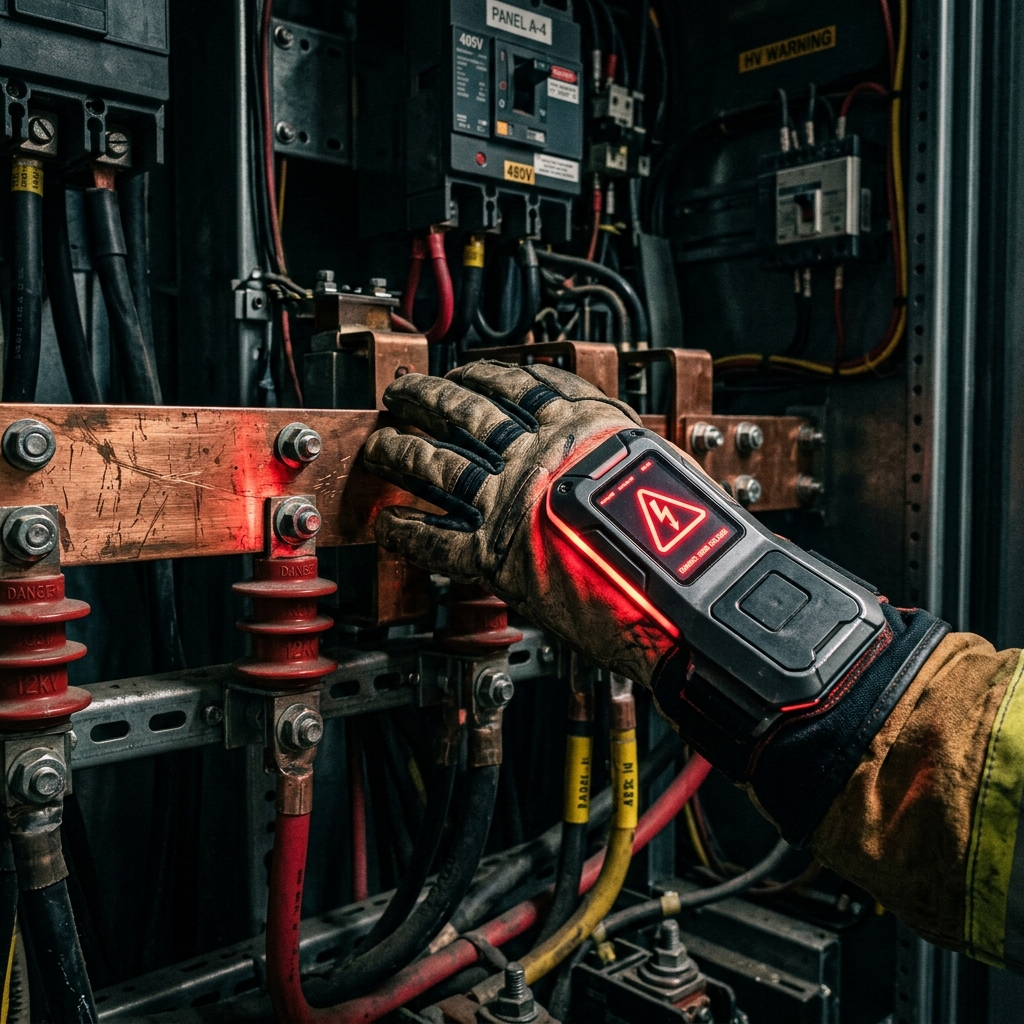
The industrial safety market has seen a massive surge in “wearable” active technology. One of the most rapidly adopted products currently hitting the mining and heavy industrial sectors is Voltage-Detecting Smart PPE—specifically gloves and wristbands embedded with low-profile near-field AC voltage detectors.
Instead of an electrician actively gripping a traditional non-contact voltage tester (NCVT), the glove itself acts as the sensor. If the worker’s hand encroaches on an energized busbar or unshielded terminal, the glove vibrates violently and flashes high-intensity LED strobes to warn them before physical contact is made.
It seems like an incredible final layer of defense. But seasoned electrical safety professionals are deeply concerned about the psychological shift this technology creates among field technicians.
The Complacency Trap
The primary hazard of wearable safety tech is the normalization of deviation.
When a worker first wears a voltage-sensing glove, they treat it as an emergency backup. But after weeks of the glove successfully warning them of live circuits, the human brain adapts to trust the technology implicitly.
Instead of meticulously confirming lockout/tagout (LOTO) and applying the absolute Test-Before-Touch standard with a certified multimeter and proving unit, the worker might unconsciously start relying on the glove. If it doesn’t vibrate, it must be dead.
But what happens when:
- The glove’s lithium-ion battery dies mid-shift?
- The worker is dealing with a DC circuit (which non-contact AC sensors cannot detect)?
- The AC sensor is magnetically masked by shielded cables or grounded metallic enclosures?
The glove remains silent, the worker reaches in, and a catastrophic shock or arc flash occurs.
Where Does Smart PPE Actually Belong?
None of this means Smart PPE is useless. When deployed correctly, it is an excellent warning system. However, it must be strictly categorized as Secondary Protection, meaning it is never used as the primary method to verify the absence of voltage.
For mining sites or industrial plants considering this technology, strict procedures must be implemented:
- Never Replace Test-Before-Touch: The glove does not replace a multimeter. It only exists to catch a gross human error (e.g., reaching into the wrong bucket or leaning against an open adjacent panel).
- Mandatory Battery Checks: The PPE must have an active self-test function that operators verify at the start of every single shift.
- Clear Limitations: Technicians must be relentlessly trained on what the glove cannot detect—namely lethal DC bus voltages inside VFD cabinets and shielded mining trailing cables.
Technology can save lives, but no battery-powered wristband will ever replace the fundamental discipline of establishing an electrically safe work condition.
Community Discussion
Join the conversation. What are your thoughts on this incident or safety topic?
Comments will appear here once the Giscus GitHub repository is linked.