
The Fatal Shower: When Missing Grounding Conductors Kill
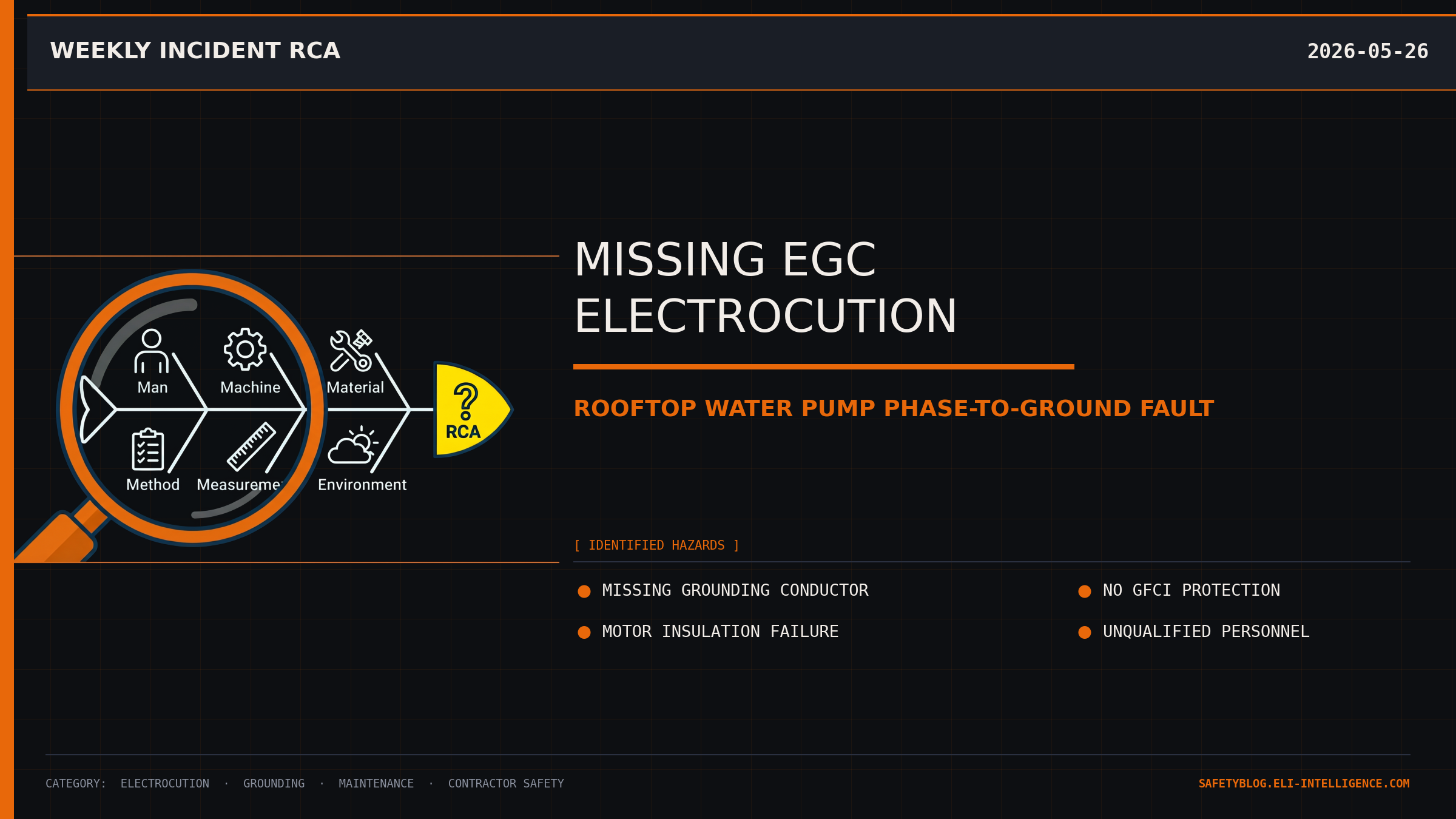
A catastrophic electrocution occurred when an ungrounded water pump energized a building's plumbing. We break down the failure of the equipment grounding conductor and the systemic failures that allowed it to persist.
1. The Hook (Flashpoint)
The water turned deadly the moment the shower was turned on. A young worker housed at a large overseas facility complex stepped into the water and was instantly subjected to a lethal electrical current. The source wasn’t a dropped hair dryer or a faulty light switch inside the stall. The lethal voltage was traveling directly through the pipes and the water itself, originating from a failed water pump on the building’s roof.
2. The Setup
The incident occurred at a large industrial complex where facility maintenance was outsourced to a third-party contractor. The building in question was an older structure retrofitted with a rooftop water pump to maintain pressure for the showers below.
Electrical safety in the complex had been a known, chronic issue. Inspections had previously revealed widespread electrical hazards, including improper splicing, lack of GFCI protection, and missing equipment grounding conductors. Despite these warnings, maintenance personnel—many of whom were reportedly undertrained and lacking proper diagnostic tools—frequently performed “band-aid” fixes to keep the water flowing rather than addressing the root electrical topology. The environment was high-pressure, prioritizing operational uptime over rigorous adherence to electrical codes.
3. The Breakdown
- The Pump Failure: The motor winding insulation inside the rooftop water pump degraded and ultimately failed, causing a dead short to the pump’s metal casing.
- The Missing Path: The pump had been installed without an Equipment Grounding Conductor (EGC). When the phase wire shorted to the casing, there was no low-impedance path to return the fault current to the source.
- The Breaker Stays Closed: Because the fault current had no return path to trip the overcurrent protection device (the breaker), the circuit remained energized.
- The Plumbing Becomes the Path: The energized pump casing was mechanically connected to the building’s metallic plumbing system. The pipes themselves became energized at line voltage.
- The Incident: When the worker turned on the shower, the water and the wet floor provided the path to earth. The current traveled through the plumbing, through the water stream, and through the worker’s body, resulting in fatal electrocution.
4. Interactive Quiz
Guess the Root Cause
Why didn't the circuit breaker trip when the water pump motor shorted to its casing?
5. The RCA
Direct Cause: A phase-to-casing short inside the water pump motor energized the connected plumbing system because the pump was missing its Equipment Grounding Conductor (EGC).
Systemic/Human Cause: The facility maintenance program normalized deviance by tolerating widespread code violations. The contractor failed to ensure that personnel performing electrical work were qualified, equipped with the right testing tools, and held to strict electrical codes (such as verifying EGC continuity during installation and maintenance). Production pressure superseded safety verification.
6. Failure Modes and Effects Analysis (FMEA)
Click to view the FMEA Table for the Un-grounded Pump Failure

7. Codes & Standards
- NEC 250.4(A)(5) — Effective ground-fault current path
- NEC 250.112 — Grounding of specific equipment
- NEC 250.114 — Equipment in wet or damp locations
- NFPA 70E Article 110.5 — Electrical safety program requirements
- OSHA 1910.304(g)(5) — Permanent and continuous path to ground
- CEC Rule 10-206 — Effective ground-fault current path
- CEC Rule 10-400 — Continuity of equipment bonding conductor
- CEC Section 26 — Installation of electrical equipment (motors)
8. Lead Magnet CTA
Are you verifying the continuity of your Equipment Grounding Conductors during preventative maintenance, or just assuming they are intact? A missing ground wire is a silent trap waiting to spring. Download our EGC Continuity & Bonding Verification Checklist to ensure every piece of rotating equipment on your site has a confirmed, low-impedance path to clear faults.
Download the EGC Continuity Verification Checklist
9. Actionable Takeaways
- Never Trust the Conduit Alone: In harsh or high-vibration environments (like pump motors), do not rely solely on metallic conduit or flex for grounding. Always pull a dedicated, sized Equipment Grounding Conductor.
- Verify the Loop: A visual inspection of a green wire isn’t enough. Use a low-resistance ohmmeter or appropriate test instrument to verify the continuity of the ground fault return path all the way back to the source.
- GFCI Protection for Wet Locations: Any equipment supplying water or operating in wet environments must incorporate GFCI protection to detect leakage current before it reaches lethal levels.
10. Closing Statement
A ground wire doesn’t make the motor spin, but it is the only thing that ensures a failure trips the breaker instead of killing the operator.
Community Discussion
Join the conversation. What are your thoughts on this incident or safety topic?
Comments will appear here once the Giscus GitHub repository is linked.